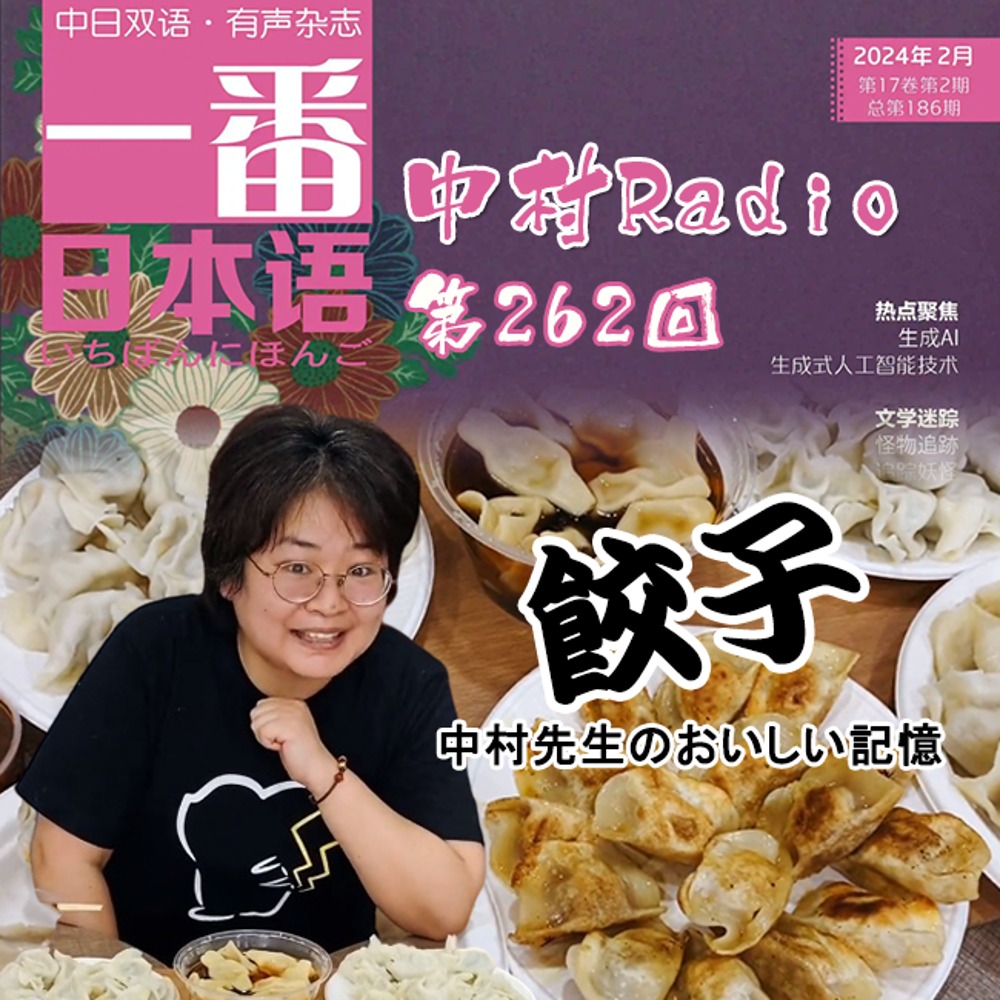
Episode 262: Best Japanese ─ Nakamura-sensei's Delicious Memories (2) Gyoza Bright voices to the world.
Published 2024-02-22 明 あか るい 声 こえ を 世 よ の 中 なか に 。 Bright voices to the world.
AI Explain 中村ラジオへようこそ。 Welcome to Nakamura Radio. 中村先生のおいしい記憶、餃子。 Nakamura-sensei's delicious memories: gyoza. 年越しが二ヶ月間にわたると書くと、きっと驚かれるだろう。 If I write that the year-end celebration spans two months, you will surely be surprised. でも中国で暮らせばそれが本当のことだとわかる。 But if you live in China, you will understand that it's true. 十二月中旬の忘年会に始まり、クリスマスパーティーで盛り上がって、紅白歌合戦で一年を締めくくる日本バージョンが終わると、中国バージョンのスタート。 It begins with the year-end party in mid-December, gets lively with Christmas parties, and after the Japanese version finishes the year with the Red and White Song Contest, the Chinese version starts. 年祝で年末ボーナスに喜び、小年で気分が高まり、春節の民族大移動へと続く。 They rejoice in the year-end bonus at the year celebration, the mood heightens with the Little New Year, and it continues to the massive migration of the Spring Festival. 春節のトリを飾る元宵節まで、お祝いメッセージや本包がネット上を飛び交い、乾杯と干杯が繰り返され、カロリー度外視のごちそうがテーブルに並ぶ。 Until the Lantern Festival, which concludes the Spring Festival, congratulatory messages and red envelopes fly across the internet, toasts and cheers are repeated, and calorie-defying feasts are laid out on the table. この日中年越し作業も今回で二十一回目となった。 This year's year-end celebration work marks the 21st time. 日本の年越しの必需品が年越しそばなら、中国の除夜は餃子を揚げる人が多いだろう。 If the essential for New Year's Eve in Japan is toshikoshi soba, then in China, many people fry gyoza on New Year's Eve. 私の好きな食べ物ランキングの常連で、包む食文化の傑作、餃子。 Gyoza, a regular in my favorite food rankings and a masterpiece of wrapped food culture. 日本の餃子は焼き餃子。 Japanese gyoza are pan-fried. 実家ではスーパーで餃子の皮を買ってきて、自分たちで包む。 At my parents' home, we buy gyoza wrappers at the supermarket and wrap them ourselves. 手先が不器用な私はひだがうまく作れなくて、焼いている時によく爆発したものだ。 Being clumsy with my hands, I couldn't make pleats well, and they often burst while frying. まあ、形はどうあれ、うまいものはうまい。 Well, regardless of shape, delicious is delicious. 高校生の頃は一人で三十個ぐらい食べていたな。 When I was in high school, I used to eat about thirty of them by myself. 大学時代に留学生として北京にやってきた時、初めて水餃子を食べた。 When I came to Beijing as an exchange student during college, I ate boiled gyoza for the first time. おかず感の強い日本の焼き餃子と違って、もちもちの皮がツルッと口に滑り込む。 Unlike Japanese pan-fried gyoza, which feel more like a side dish, the chewy skin slides smoothly into your mouth. 中国の水餃子はすいとんの親戚みたいで全くの別世界。 Chinese boiled gyoza are like relatives of suiton, a completely different world. 注文はいつも半斤で、日本の女の子も結構食べると驚かれたっけ。 I always ordered half a kilo, and I recall being surprised that Japanese girls also eat a lot. 二〇〇三年にもう一度中国にやってきてから、一体どれぐらい餃子を食べてきたのだろう。 Since coming to China again in 2003, I wonder just how many dumplings I have eaten. 仕事が夜遅く終わる私にとって、真夜中まで開いている餃子屋は強い味方だ。 For me, who finishes work late at night, a dumpling shop open until midnight is a strong ally. 出張や旅の途中で出会う餃子も忘れがたい。 The dumplings I encounter on business trips and travels are also unforgettable. 湖が多い湖北省武漢では名産のレンコンを使った餃子が美味しかったし、遼寧省大連の空港で食べたパイーの餃子は絶品だった。 In Wuhan, Hubei Province, which has many lakes, dumplings made with the local specialty lotus root were delicious, and the pai'er dumplings I ate at the airport in Dalian, Liaoning Province were exquisite. 新疆レストランで食べた羊肉の餃子はエキゾチックな顔をしていたし、杭州に行けば海老餃子が私を待っている。 The mutton dumplings I ate at a Xinjiang restaurant had an exotic appearance, and if I go to Hangzhou, shrimp dumplings await me. ああ、いつかは東北地方で本場の酸菜餃子を食べてみたいものだ。 Ah, someday I want to try authentic pickled cabbage dumplings in the Northeast region. 好きな中華料理が餃子だと答えると、決まって日本の焼き餃子と中国の水餃子はどちらがおいしいか? When I answer that my favorite Chinese dish is dumplings, I am always asked, とよく聞かれる。 'Which is more delicious, Japanese pan-fried dumplings or Chinese boiled dumplings?' 正直甲乙つけがたいのだけど、具はやっぱりニラがいい。 Honestly, it's hard to say which is better, but when it comes to the filling, chives are the best. 色が濃く香りが高いニラが最高だ。 Dark-colored and highly fragrant chives are the best. これは子供の頃から変わらない。 This hasn't changed since I was a child. なんだかお腹が空いてきたぞ。 Somehow I'm getting hungry. これを書き終えたら、近くの餃子屋に行ってこよう。 When I finish writing this, I'll head to the nearby gyoza shop. 注文はもちろん、二両肉菜で。 Of course, I'll order two servings of meat and vegetable gyoza. 来た、来た。 Here it comes, here it comes. えっと、こっちがくんくんの青菜ね。 Um, this is the kunkun greens. タレはどうする? What about dipping sauce? 醤油とラー油で先生は? Soy sauce and chili oil for you, teacher? 私はいつものお酢と豆辣油。 I'll have my usual vinegar and bean chili oil. 日本の人にとって餃子といえば焼き餃子ですけど、タレはどうしてるんですか? For Japanese people, when they say gyoza, it refers to pan-fried gyoza, but what about the dipping sauce? オーソドックスなのはお酢と醤油にラー油を垂らしたものだね。 The orthodox one is a mixture of vinegar, soy sauce, and a drop of chili oil. 最近はグルメ番組の影響でお酢に胡椒をたっぷり入れたものも人気があるみたいだけど。 Recently, due to the influence of gourmet TV shows, the one with plenty of pepper in vinegar also seems popular. そうだ、思い出しました。 That's right, I remember now. 二〇一四年にはじめて日本に行った時、大阪で餃子の王将に入りましたよね。 When I first went to Japan in 2014, I went to Gyoza no Ohsho in Osaka, right? その時、先生が一人でラーメンとチャーハンと焼き餃子を注文したから驚いたんですよ。 At that time, I was surprised because you, sensei, ordered ramen, fried rice, and pan-fried gyoza by yourself. 驚かないでよ。 Don't be surprised. 半チャーハン麺に餃子は日本の町中華の基本中の基本だよ。 Half fried rice + noodles + gyoza is the most basic order at a Japanese town Chinese restaurant. そんな炭水化物かける三みたいな注文、中国ではなかなかないですよ。 An order like that, multiplying carbs by three, is quite rare in China. 中国は麺もチャーハンも餃子も単品でお腹いっぱいになる量だからね。 That's because in China, noodles, fried rice, and gyoza each come in portions that fill you up on their own. 日本の焼き餃子は主食じゃなくておかずだから、実家で食べる時もご飯が出てくるよ。 In Japan, grilled gyoza is not a main dish but a side dish, so when I eat them at home, rice is also served. 中村家特製のニンニクを効かせたニラ餃子は白いご飯にぴったりなのよ。 Nakamura family's special garlicky chive gyoza goes perfectly with white rice. 餃子とご飯を一緒に食べるだなんて。 Eating gyoza with rice, huh. 所変われば品変わるってよく言いますけど、まさにそうですね。 As the saying goes, 'Every country has its own customs,' and that's exactly it. 私も中国に来て、餃子屋の壁に貼ってあるメニューを見て驚いたよ。 When I came to China too, I was surprised to see the menu posted on the wall of a gyoza shop. ニラにセロリにシイタケ、長ネギにパクチー。 Chives, celery, shiitake mushrooms, green onions, cilantro. いろんな具があるんだもん。 There are so many different fillings. 日本はだいたい一種類だからね。 In Japan, it's usually just one kind. 中国国内も南や北で具や形が違いますね。 Even within China, the fillings and shapes differ between the south and the north. そうそう。 Right, right. 二〇〇三年に武漢にやってきて、餃子を見た時、第一印象は小さいだったよ。 When I came to Wuhan in 2003 and saw the gyoza, my first impression was that they were small. 記憶の中にある北京の餃子は一両四個だったけど、こちらでは六個だもんね。 The gyoza I remember in Beijing were four per liang, but here they are six. 日本の餃子は全国的に同じなんですか? Are gyoza the same all over Japan? 福岡の博多一口餃子のように小ぶりなタイプやジャンボ餃子を売りにしている店もあるけど、だいたい同じ大きさで一人前五、六個だよね。 There are small types like Fukuoka's Hakata hitokuchi gyoza and shops that specialize in jumbo gyoza, but generally they are about the same size, with five or six per serving. 具は白菜やキャベツ、ニラのブレンドが多いかな。 The filling is often a blend of Chinese cabbage, cabbage, and chives. 最近は日本の中華もガチ化が進んで、水餃子を出す店も増えたみたいだよ。 Recently, Chinese cuisine in Japan has become more authentic, and it seems that more restaurants are offering boiled gyoza. きっと水餃子ファンが急増しますよ。 I'm sure the number of boiled gyoza fans will increase rapidly. 日本で暮らす中国人にとっても懐かしいお国の味ですね。 For Chinese people living in Japan, it's a nostalgic taste of home. そうだね。 That's right. ねぇ、くんくん。 Hey, sniff sniff. 私今日は二両じゃ物足りない。 I'm not satisfied with just two servings today. 先生、もうすぐ爆食の春節がやってきますから、今は我慢ですよ。 Sensei, the Spring Festival with its binge eating is almost here, so be patient for now. そうそう、我慢、我慢。 Yes, yes, patience, patience. 今年はどんな年越し料理かな? What kind of New Year's Eve dishes will we have this year? 皆さん、ぜひもうメンツに幸せな美食写真をアップしてくださいね。 Everyone, please be sure to post photos of happy delicious food on Moments. 楽しみにしています。 I'm looking forward to it.